 Why Walkways Are Essential for Safety, Health, and the Environment
Walkways offer structure, safety, and environmental protection within any residential landscape. They guide foot traffic, reduce erosion, and help homeowners maintain a clean, usable yard.
Safety Benefits
A well-designed walkway reduces tripping hazards by providing a clear, even path through your yard. Proper lighting along the route further improves nighttime visibility, keeping residents and guests safe.
Health Benefits
Walkways encourage regular outdoor movement, supporting a more active lifestyle. They also prevent lawn damage by minimizing soil compaction and protecting garden spaces from accidental foot traffic..
Environmental Benefits
Walkways help control runoff, prevent soil erosion, and protect plant roots. When built with permeable materials, they also reduce stormwater impact and support healthier landscapes.
Different Types of Walkways
Choosing the right walkway depends on your home’s style, your budget, and the level of maintenance you’re willing to commit to.
Concrete Paths
A concrete walkway provides strength and longevity. It handles heavy foot traffic and resists weather changes. Concrete can be textured or stamped for visual interest. It is low-maintenance and works well in modern or formal designs.
Brick Paths
A brick walkway adds warmth and charm. It is ideal for garden paths and entryways. Bricks are durable and offer traction. You can create patterns like herringbone or basketweave to enhance visual appeal.
Stone Paths
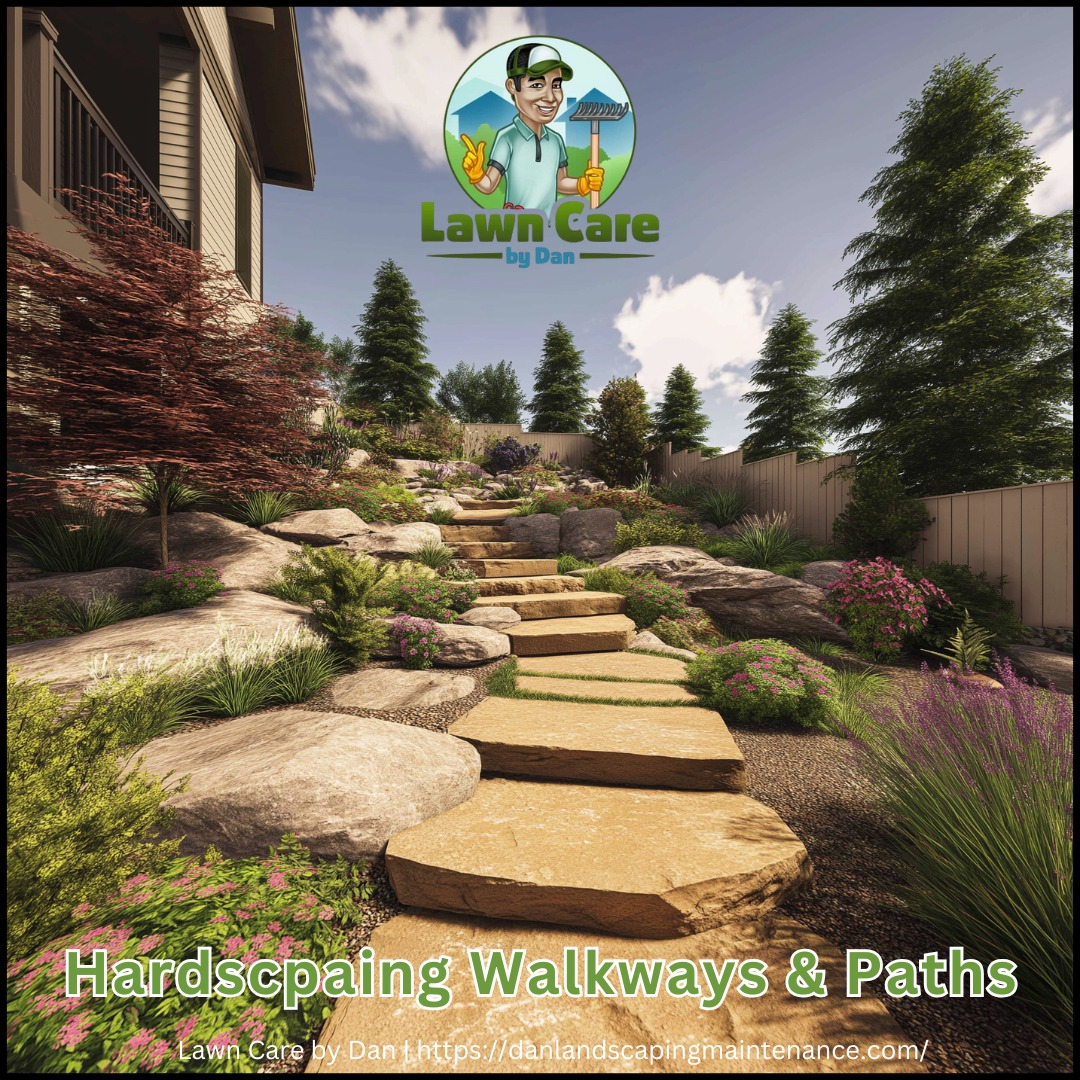
A flagstone walkway or walkway stones provide a natural look. Irregular shapes allow for creative designs that complement gardens. Stone surfaces are slip-resistant and blend seamlessly with surrounding greenery.
Wooden Walkways
Wood is perfect for natural or rustic spaces. It works well over uneven terrain or near water features. With proper sealing and regular maintenance, wooden paths can last for years. They offer warmth and texture to your landscape.
How to Design Walkways That Work and Look Great
Planning your walkway is critical for safety, aesthetics, and functionality. The right design ensures ease of use and long-term durability.
Planning the Route
Identify natural walking patterns around your yard. Direct paths reduce lawn wear, while thoughtful routing avoids drainage issues or puddling.
Choosing the Material
Your climate, traffic levels, and overall landscape style determine the best material. Concrete is well-suited to heavy use, stone handles uneven ground, and pavers provide structure and visual interest.
Considering Width and Length
Walkways should be wide enough for two people to walk side by side. Avoid tight curves or narrow areas that feel cramped.
Incorporating Landscape Features
Enhance your walkway with lighting, edging, and plants. Integrating it with surrounding features helps unify your yard’s design.
Step-by-Step Guide to Building Walkways
A long-lasting walkway requires proper groundwork.
- Remove topsoil and debris. Clear away grass, roots, and loose soil to expose a stable foundation. This step helps prevent shifting and sinking later.
- Compact the soil for stability. Use a hand tamper or plate compactor to create a firm base that supports weight and resists erosion.
- Add a gravel or sand base. Spread and level a base layer to improve drainage and strengthen the walkway structure.
- Lay your chosen material carefully and level it. Fit pavers, stones, or concrete sections evenly to ensure a smooth walking surface.
- Secure edges to prevent shifting. Install edging restraints or borders to keep materials locked in place over time.
- Finish by filling joints, sealing surfaces, and smoothing edges. Add joint sand, apply sealant if needed, and refine borders to complete a clean, durable walkway finish.
Professional installers like Lawn Care by Dan follow proven construction methods to ensure durability and safety.
Maintenance Tips for Long-Lasting Performance
Regular maintenance keeps your walkway safe, attractive, and functional year-round. Routine maintenance not only extends the lifespan of your landscape but also helps prevent hazards and preserve its overall appearance.
Regular Cleaning
Keeping your walkway clean helps prevent staining, wear, and long-term surface damage. Sweep away leaves, dirt, and debris often so moisture doesn’t get trapped where it can cause deterioration. Occasional pressure washing brightens stone or concrete, while gentle cleaners help protect wood from mold and mildew.
Repairing Damage
Repairing small issues early prevents them from becoming expensive structural problems. Fix cracks as soon as they appear and reset loose pavers to maintain a stable, even surface. If you notice sections shifting or settling, adding base material and re-leveling the area can restore safety and appearance.
Seasonal Care
Seasonal maintenance ensures your walkway withstands changing weather conditions. In winter, remove snow and ice using walkway-safe tools and products to avoid damaging the material. Spring is an ideal time to check for erosion, frost heave, or drainage issues that may have caused uneven surfaces. Summer and fall are perfect times to reseal surfaces, reinforce edging, and make small repairs before the next weather cycle.
Walkway Regulations and Standards
Walkways must follow local safety and accessibility guidelines. Proper slope, width, and surface texture help keep your landscape compliant and safe for everyone.
We at Lawn Care by Dan always adhere to regulations while building walkways, ensuring safe, durable, and functional paths.
Future Trends in Walkway Design
Sustainable materials reduce environmental impact. Recycled stone, permeable pavers, and durable composites are gaining popularity. Smart features, such as built-in lighting and moisture sensors, improve safety and efficiency. Inclusive design ensures accessibility for all users.
Get Expert Walkway Design and Installation from Lawn Care by Dan
Contact Lawn Care by Dan today to plan and install custom Walkways for your property. Our team provides expert walkway installation, pavers, and durable path solutions tailored to your landscape. Let us help you transform your yard into a functional, beautiful space.
Frequently Asked Questions
How long does a walkway last?
Lifespan depends on material and maintenance. Concrete and brick last for decades with proper care. Stone and wood require more upkeep but remain durable.
Can I combine materials for a walkway?
Yes. Mixed materials, such as brick and stone, create visual interest. Proper base and joint preparation are essential.
How do I prevent weeds between pavers?
Use polymeric sand or joint filler. Regular sweeping and occasional herbicide applications keep joints clean.
What is the safest surface for children?
Textured stone or concrete pavers provide traction. Avoid slippery finishes. Soft borders or mulch enhance safety.
Do they increase property value?
Yes. Well-designed Walkways improve curb appeal, safety, and functionality. Buyers value structured, attractive outdoor spaces.